
In 1849 the Scottish essayist and historian Thomas Carlyle published one of the most controversial works of his career: Occasional Discourse on the Negro Question. Appearing in the British magazine Fraser's Magazine, the essay provoked immediate public backlash because of its arguments about slavery, labor, and race in the aftermath of abolition in the British Empire.
The text emerged during a turbulent period in transatlantic history. Although the slave trade had been outlawed by Britain in 1807 and slavery itself abolished across the British Empire in 1833, the institution persisted in other parts of the world, including the United States, Cuba, and Brazil. Debates about labor systems, imperial economics, and race continued to shape political discourse throughout the nineteenth century.
This article examines the origins of Occasional Discourse on the Negro Question, focusing on its historical context, Carlyle's motivations, the literary device used in the original publication, and the controversial ideas attributed to its fictional speaker.
Historical Context: Abolition and Post-Emancipation Debates
By the middle of the nineteenth century, Britain had already undergone major legal changes regarding slavery. The abolition of the slave trade in 1807 marked the first major legislative victory for the British abolitionist movement. This was followed by the Slavery Abolition Act 1833, which formally ended slavery in most territories of the British Empire.
However, emancipation did not end debates about labor and empire. Plantation economies in the Caribbean faced profound transitions as formerly enslaved people sought autonomy and alternative employment, while many colonial administrators and plantation owners claimed the new system reduced productivity.
At the same time, slavery continued legally in several other parts of the world. In the United States the institution remained deeply entrenched until the Civil War of the 1860s. Cuba and Brazil also maintained slave systems well into the nineteenth century.
Carlyle's Motivations and Intellectual Background
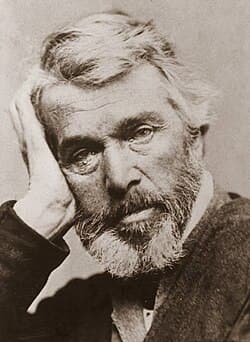
Thomas Carlyle was already an influential intellectual figure by the time he wrote the essay. Known for works such as Sartor Resartus and The French Revolution, he had developed a reputation for sharp criticism of modern industrial society and democratic ideals.
Within this framework, Carlyle became increasingly skeptical of liberal reforms that he believed weakened traditional hierarchies. The abolition movement, in his view, represented a humanitarian enthusiasm that overlooked practical questions about labor, governance, and economic stability.
The essay that became Occasional Discourse on the Negro Question began partly as intellectual provocation. Carlyle adopted a "devil's advocate" approach, trying to challenge what he perceived as contradictions in abolitionist rhetoric.
The Fictional Reporter: Phelin M'Quirk
One of the most distinctive features of the essay's first publication was its narrative framing. Carlyle did not initially present the piece as his own straightforward argument. Instead, he introduced it as a speech delivered by an unnamed figure and recorded by an unreliable reporter named Phelin M'Quirk.
The fictional backstory added an extra satirical layer: M'Quirk allegedly abandoned the manuscript in his rented room before disappearing, and his landlady sold it to the publisher as compensation for unpaid rent.
This device gave Carlyle rhetorical distance from the arguments, but did little to shield him from criticism once readers interpreted the text as effectively endorsing those views.
Arguments Presented in the Essay
The fictional speaker advances provocative claims about race, labor, and colonial society. One core theme is skepticism toward abolitionist narratives about cruelty in the slave trade, along with criticism of Britain's anti-slavery position in a world where slavery persisted elsewhere.
Another argument concerns post-emancipation economics: the suggestion that freed populations might not fit wage-based labor systems without coercive structures. The essay also uses paternalistic language implying enslavers should have remained responsible for enslaved people as if they were family members.
Critics viewed these claims as attempts to rationalize racial hierarchy and coercive labor.
Reaction and Public Controversy
Contemporary reaction was overwhelmingly negative. Many readers interpreted the text as a defense of slavery and a rejection of abolitionist moral principles.
Even some of Carlyle's friends and allies expressed concern that his rhetorical strategy had gone too far, damaging both his reputation and the credibility of his broader philosophical ideas.
The controversy became central to later assessments of Carlyle's public legacy.
Later Editions and Authorial Responsibility
In later editions, Carlyle removed the Phelin M'Quirk framing. Without that narrative layer, the text appeared more directly as Carlyle's own position.
This editorial change intensified criticism and highlighted a broader lesson: rhetorical distance can collapse when the underlying arguments are considered ethically and politically unacceptable.
Intellectual Legacy and Historical Interpretation
Today, the essay is studied mainly as a historical document that reflects nineteenth- century debates about race, empire, labor, and political authority.
Scholars analyze it as evidence of how influential intellectual figures could articulate ideas now regarded as deeply problematic, and how literary form and public rhetoric can shape the reception of controversial political claims.
Its historical significance lies less in validating its arguments and more in illuminating the ideological conflicts of the period.
The origins of Occasional Discourse on the Negro Question reveal a complex intersection of intellectual provocation, political debate, and literary experimentation. Studying its origins and reception offers insight into historical arguments about race, labor, and empire, and into the enduring power of rhetoric in public life.
References
- Carlyle, T. (1849). Occasional Discourse on the Negro Question. Fraser's Magazine. https://www.gutenberg.org/ebooks/1944
- Harris, J. (2011). Carlyle and the Victorian Debate on Slavery and Empire. Oxford University Press. https://global.oup.com/academic/product/carlyle-and-the-victorian-world
- Hall, C., Draper, N., McClelland, K., Donington, K., & Lang, R. (2014). Legacies of British Slave-Ownership: Colonial Slavery and the Formation of Victorian Britain. Cambridge University Press. https://www.cambridge.org/core/books/legacies-of-british-slaveownership
- Pitts, J. (2005). A Turn to Empire: The Rise of Imperial Liberalism in Britain and France. Princeton University Press. https://press.princeton.edu/books/paperback/9780691127489/a-turn-to-empire
- Britannica. (n.d.). Thomas Carlyle. Encyclopaedia Britannica. https://www.britannica.com/biography/Thomas-Carlyle